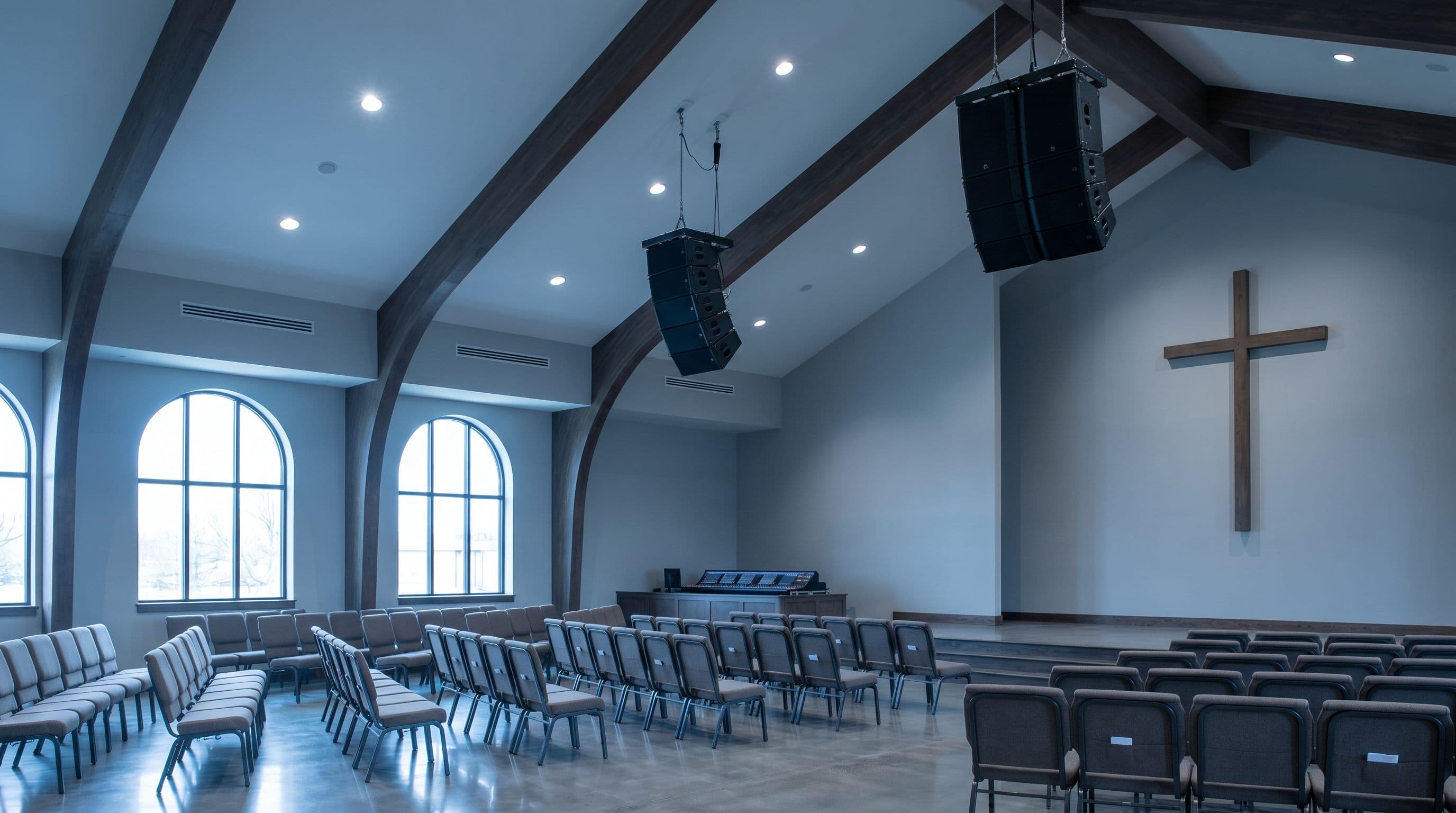
House of Worship
Technology that disappears, so the message doesn't. Every seat in your sanctuary should hear every word — from the back row to the overflow room to the hearing aid. We design, install, and maintain the AV, networking, and assistive listening systems that let your congregation focus on worship, not Wi-Fi.
Technology That Disappears, So the Message Doesn't.
When a longtime member stops coming because they can't hear the sermon, you've lost more than a face in the pew. When the live stream cuts out, the homebound members miss the service. When the door reader fails in the kids' wing, a volunteer spends Sunday morning troubleshooting instead of serving. The technology in a sanctuary has one job: get out of the way.
Axis Connected Technologies designs, installs, and maintains the full technology stack for worship spaces — sanctuary AV, assistive listening, streaming, networking, surveillance, and access control — under one Florida low-voltage license (ES#12001512). We're an authorized Listen Technologies dealer, and unlike most integrators in the state we install hearing loops in-house. One team designs the system, pulls the permits, runs the cable, trains your volunteers, and answers the phone when something needs attention.
What a project looks like with us: we start with a sanctuary walkthrough — your space, your acoustics, your service style, your volunteer team, the seat where the pastor's mother sits. We scope the system to fit how you actually worship, not how a spec sheet says you should. Then we design, permit, install, train your volunteers on the booth, and maintain it under SLA. From the first walkthrough to the first Sunday — and every Sunday after — one team is accountable for every cable, every speaker, every receiver.
Hearing Every Word — Assistive Listening Done Right
Authorized Listen Technologies dealer. Hearing loops installed in-house.
Most AV companies install speakers and stop there. We start with the question your facilities team is quietly asking: can every person in this sanctuary actually hear the message? An aging congregant with hearing aids, a guest who speaks Spanish, a homebound member on the stream, a volunteer translator coordinating an interpretation team — each one needs a different path to the same sermon. As an authorized Listen Technologies dealer who installs hearing loops in-house (most integrators in Florida sub it out), we deliver the full assistive-listening stack — and design it so the congregation never has to think about it.
For Members with Hearing Aids
Hearing Loop Systems — induction-loop technology that sends sermon audio directly to telecoil-equipped hearing aids and cochlear implants. We install in-house, not subcontracted.
For Every Phone in the Pew
ListenWIFI streams sermon audio over your existing Wi-Fi directly to congregants' smartphones — bring-your-own-device assistive listening, no extra receivers to manage.
For Large or Multilingual Services
ListenRF receivers for traditional long-range assistive listening in large sanctuaries; ListenIR for confidential interpretation and multilingual translation booths.
Sanctuary AV & Live Streaming
Speech intelligibility from the front pew to the back row to the homebound member.
A sanctuary is the hardest room in commercial audio — reverberant ceilings, mixed congregation noise, a pastor moving on and off mic, music transitions, the live stream that needs its own dedicated mix. QSYS-engineered audio with speech-intelligibility tuning, video routing for in-house overflow and remote streaming, and a network sized for broadcast uplink replace the patchwork most churches inherit. Designed to be run by a Sunday-morning volunteer at a one-touch control surface, not a sound engineer.
Sanctuary Audio
QSYS-driven speech-intelligibility audio for sanctuaries of every size — engineered for the room, mixed for the volunteer, tuned for the back pew.
Streaming & Overflow
Dedicated broadcast audio routing, redundant streaming uplinks, and synchronized overflow-room and cry-room distribution that keeps every space feeling like one congregation.
Networking
UniFi networks built for the demands of a worship space — broadcast-grade streaming uplink, guest Wi-Fi, kids-wing devices, and back-office traffic all isolated on the same managed platform.
Stewardship of the Space
Cameras, credentials, and cabling for the six days a week the sanctuary isn't in session.
A church building is busiest the day after the largest gathering — kids' programs, mid-week services, community groups, weddings, funerals, the weekday office, and the empty parking lot after dark. Access control on the kids' wing and the after-hours doors, AI-detection cameras at entries and in the parking lot, and a structured cabling backbone that supports the next 10 years of additions — the systems that protect the people, the building, and the budget when the lights are off.
Access Control
Kids-ministry check-in, after-hours building access, and zone-based staff and volunteer credentials with full audit logs.
Video Surveillance
AI-detection cameras covering sanctuary entries, kids wing, parking lot, and fellowship hall — recording retention sized for what insurance and your board will ask for.
Structured Cabling
Fiber backbone and Cat 6A distribution designed for the building lifecycle — supports today's AV and tomorrow's additions without re-pulling the walls.
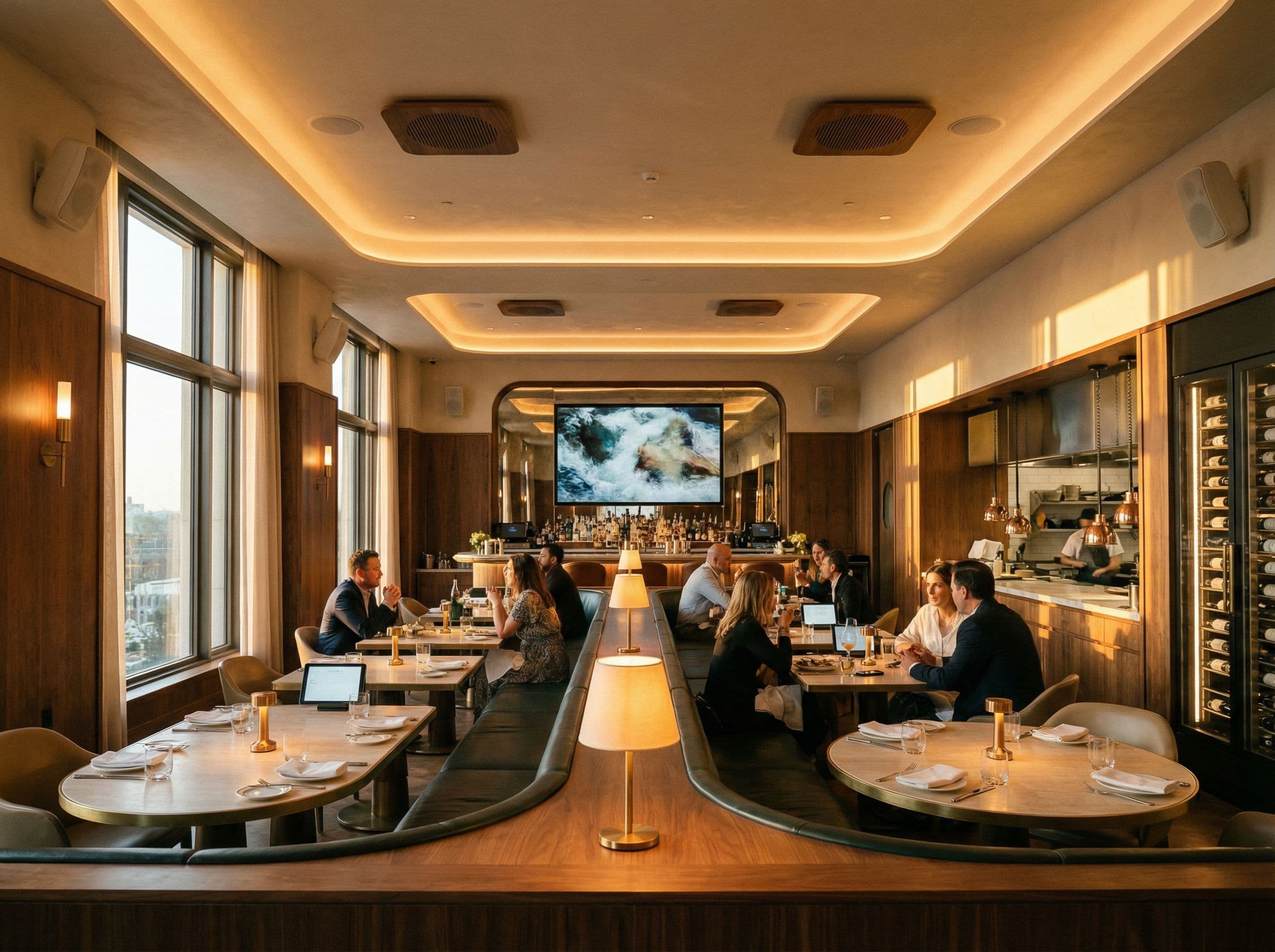
Built for the Sunday-Morning Volunteer
We're an authorized Listen Technologies dealer, and we install hearing loops in-house — most integrators in Florida sub this out, which means a longer install, a second vendor on your facilities call list, and no one accountable when something needs to be re-tuned. We own the install, the tuning, and the SLA call. Our Florida ES#12001512 license covers nine counties, and our turnkey crew designs, permits, installs, and documents the system under one roof.
Every system we install in a sanctuary is designed to be operated by a Sunday-morning volunteer — not a specialist. One-touch QSYS control surfaces, documented run-of-show your AV team can hand off, and an SLA built for the reality that something always needs attention the Saturday before Easter. We're not the cheapest integrator in the state, and we're not trying to be. What we're selling is a system that disappears into the worship experience and a phone that gets answered when it doesn't.
Frequently Asked Questions
We install hearing loops in-house. We're an authorized Listen Technologies dealer and the hearing loop is one of the systems we install, tune, and maintain ourselves — unlike most low-voltage integrators in Florida, who subcontract the loop work to a specialist and disappear once the install is done. That matters when a loop needs to be re-tuned six months in or when a section of the sanctuary gets a hearing-aid complaint.
Two paths. The cleanest is a hearing loop installed in the sanctuary floor — members with telecoil-equipped hearing aids or cochlear implants get the sermon audio directly, with no extra device to carry. For members without telecoils, we deploy ListenRF receivers (traditional radio-frequency assistive listening receivers with headphones) — borrowed from the ushers, no smartphone required, reliable for long-range coverage in large sanctuaries.
Yes — that's how we design every sanctuary system. QSYS one-touch control surfaces, documented run-of-show, and presets for the service flow your church actually uses (call to worship, sermon mode, music mode, baptism mode, overflow mode). We train your volunteer team and leave behind documentation a substitute can follow. The system is designed for a rotating Sunday-morning team, not a paid sound engineer.
Yes. The same QSYS core that drives the sanctuary audio handles synchronized multi-zone distribution to overflow rooms, cry rooms, fellowship halls, and a dedicated broadcast feed for the live stream. Every space gets its own mix where useful — overflow rooms hear the full service, the cry room can have a softer mix, the stream has its own broadcast-tuned output.
Almost always. We design the full system on the front end so every phase fits a coherent plan — then we sequence the work to your funding cycle. Sanctuary audio and the hearing loop first, streaming and overflow second, kids-wing access control and parking-lot surveillance in a later phase. Each phase is operational on its own; nothing gets ripped out when the next phase arrives.
Yes. A lot of our worship work is in older sanctuaries — high ceilings, plaster walls, stained glass, and a board that doesn't want visible cable runs. We design installs that respect the building, route cabling through non-visible pathways, and hide the technology so a first-time visitor doesn't notice it. The sanctuary walkthrough is where this conversation starts.
Plan Your House of Worship Project
Backed by our four-pillar guarantee — On Time · On Spec · On Budget · On Going. Tell us about your property, your challenges, and your goals.