If you're spec'ing TV distribution for a multi-room commercial property — a hotel, an MDU, a senior living facility, a sports bar with separate dining rooms — you have basically two architecture choices:
- Run separate residential boxes to every room. Cheap to install. Expensive to manage. Pays for itself in headaches by month six.
- Install a centralized headend that distributes signal to every room from one place. More upfront. Dramatically less ongoing cost.
The COM3000 is the headend that makes option two the default. Here's why it shows up in 12-room boutiques and 250-room resorts alike.
What the COM3000 actually is
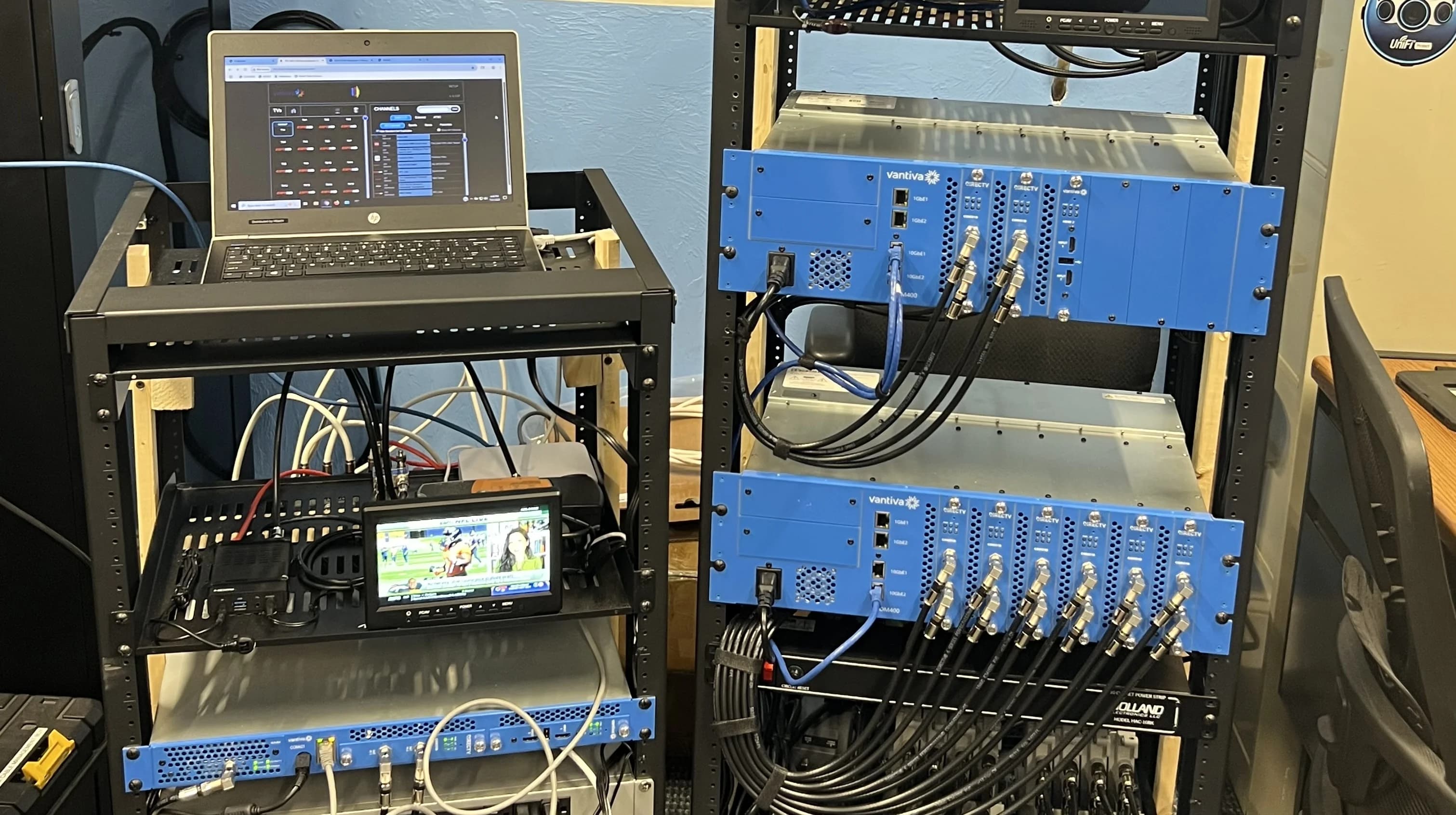
The COM3000 is DIRECTV's commercial headend — a chassis that receives DIRECTV programming and converts it into IP video that gets distributed to every TV on the property over the existing coax or IP network.
In practical terms, that means:
- One DIRECTV account, not 250. A single commercial subscription covers the entire property.
- Custom channel lineups per zone. The gym gets sports channels and news. The lobby gets news only. The conference rooms get a curated set. Each zone's lineup is configured in software.
- In-room property branding. Hotels can push the property's logo, welcome screens, and on-screen messaging through the same delivery as DIRECTV programming.
- One bill, one point of contact. No tracking which rooms have working subscriptions and which need a residential truck roll.
Why it scales from 12 rooms to 600
The architecture is the same regardless of property size. A 12-room boutique hotel runs a single COM3000 chassis. A 600-room resort runs multiple chassis in parallel, each handling a wing or building, all reporting to a central management interface.
The components scale linearly:
- Programming sources — DIRECTV satellite receivers feed the headend
- Modulators — convert sources to IP or QAM as required for the property's distribution
- Distribution amplifiers — boost signal across long coax runs
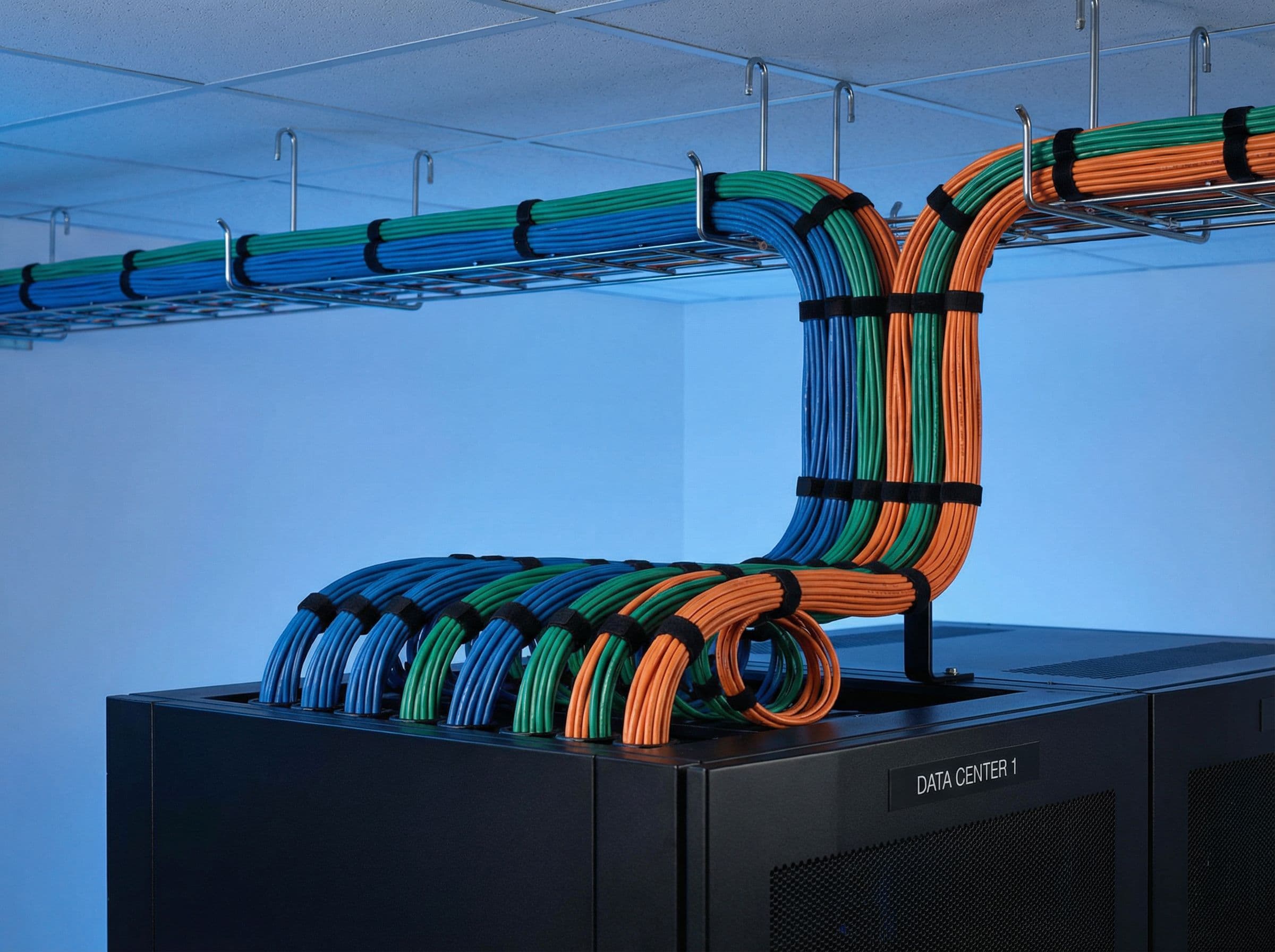
- Property network or coax backbone — delivers signal to every TV
What does NOT change as you scale: the in-room experience, the channel lineup management interface, or the IT staff's mental model of how the system works. A property manager who's used the COM3000 at a 50-room property in year one can manage the 200-room property in year three without retraining.
The AEP layer
For lodging and institutional properties, the COM3000 pairs with AEP — the Advanced Entertainment Platform. AEP delivers:
- Interactive in-room experiences. Guests can see property info, restaurant menus, spa availability, and check-out tools directly through the TV.
- Per-room welcome screens. A guest checking into room 412 sees "Welcome, Mr. Smith" on their TV when they first power it on. The next guest in that room sees their own welcome screen automatically.
- Property-specific channel curation. A wellness resort can prioritize spa, yoga, and meditation channels in the guide. A sports bar can prioritize ESPN, NBC Sports, and league-specific channels.
- Centralized messaging. Push fire-drill notifications, severe weather alerts, or property announcements to every TV from the front desk.
AEP is what turns the in-room TV from a passive screen into an active guest service surface. The combination of COM3000 + AEP is the architecture behind nearly every premium hospitality property's video experience over the last five years.
When the COM3000 is the wrong call
Honest answer: there are scenarios where a commercial headend is overkill.
- A single bar or restaurant with fewer than 6 TVs and a single zone — a commercial DIRECTV receiver paired with a matrix switcher is often the right answer.
- A small office with a single conference room and a single TV — residential DIRECTV is fine.
- A short-term rental or vacation rental property with no centralized management — streaming services on individual smart TVs solve the same problem.
The crossover point where a headend becomes the right architecture is roughly eight or more zones with shared programming requirements. Below that, the headend's centralization benefits don't outweigh the install cost. Above it, the headend pays for itself in the first year through subscription consolidation alone.
What to ask your installer
Three questions separate the installers who deploy COM3000 systems correctly from the ones who don't:
- What's your zone-design process before install? A good installer maps every TV to a zone, every zone to a channel lineup, and every channel lineup to a property need — before pulling the first cable. A bad installer treats every TV as identical.
- How do you handle property branding and on-screen messaging? The COM3000 supports this natively; the installer has to know how to configure it. If they don't have AEP experience, the system will ship without the in-room experience that makes the investment worth it.
- What's the ongoing service model? Properties that don't have an SLA for their headend pay for emergency truck rolls every time a guest complains about a channel. Properties that do have one pay a predictable monthly cost and rarely see a technician outside scheduled visits.
Our DIRECTV commercial solutions page covers the full COM3000 architecture for different vertical use cases, and our DIRECTV service page walks through how we approach the install itself.