Most commercial low-voltage failures aren't software failures. They're cable failures — bent past spec, run too long, terminated with the wrong tooling, or simply not designed for what the building grew into.
When we design a building's low-voltage backbone, we're not designing for what the property looks like at handoff. We're designing for what it looks like in year seven — when the camera count has doubled, the WiFi density has tripled, and a new tenant wants 10G uplinks to every floor.
What "structured" actually means
Structured cabling isn't a brand. It's a discipline. The TIA-568 standard, in practical terms, says:
- Cable runs are categorized and labeled at both ends, every time
- Pathways are planned before drywall closes — not chased after the fact
- Termination tools and modules match the cable spec (no Cat 6A pulled and terminated on Cat 5e jacks)
- Distribution rooms are sized for growth — not packed to capacity at install
Every system on top of the cable inherits its weaknesses. A 4-port camera switch in the wrong closet means latency. A backbone fiber too short to reach the new MDU clubhouse means a $40K trenching project to fix later.
The cost of getting it wrong
We're often called in to clean up cabling installed by the lowest bidder. The pattern is always the same:
- Original install meets the bid spec, barely. Cat 6 where Cat 6A was specified. Bundled tightly enough to cause near-end crosstalk. Punched down on tooling that wasn't the right gauge.
- Two to four years pass. The building adds cameras, access points, and surveillance. WiFi performance complaints start.
- A consultant traces the issues back to the cable plant. Not the routers, not the switches — the actual copper.
- The fix costs 3-4x what the original install would have. Sometimes more if walls have to open back up.
That last number is consistent enough that we treat it as a planning assumption. Cheap cabling is the most expensive thing in a commercial building, by year five.
What a "Danny-certified" rack looks like
There's a phrase that gets used internally for any rack we'd put a photo of on the website. Three things make a rack Danny-certified:
- Every cable is labeled and terminates where it should. A technician walking into the closet five years from now should be able to trace every run.
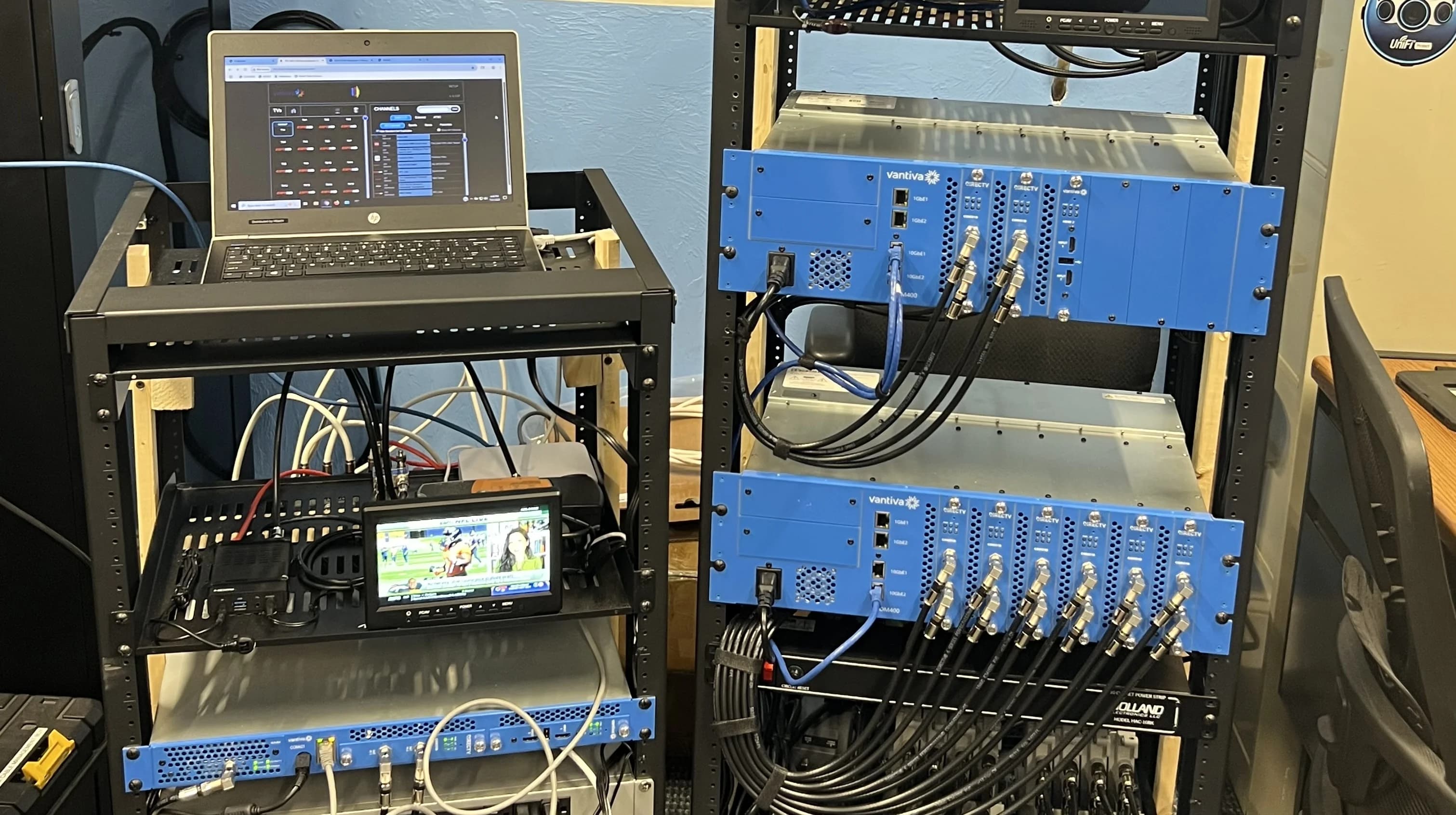
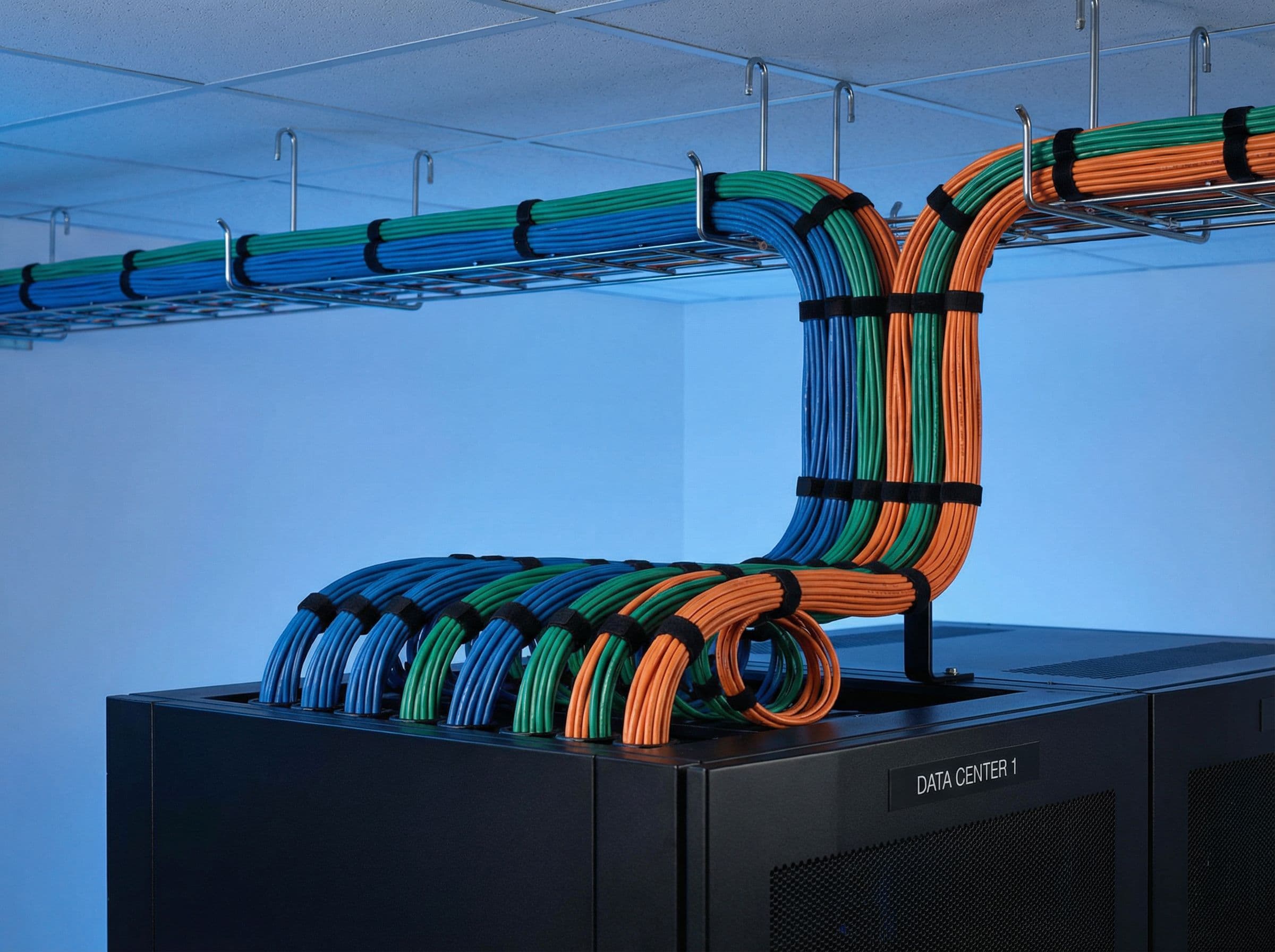
- Cable management isn't an afterthought. Horizontal managers, vertical waterfalls, and service loops — every run dressed and tied.
- There's space left for the next contractor. We've all walked into closets where there isn't a single open U for the next switch. That's not the next contractor's problem — that's the previous contractor's failure of imagination.
Specifying it on your next project
If you're a construction estimator, IT director, or property manager evaluating bids, three questions separate the contractors who do this right from the ones who do it cheaply:
- What's your termination standard, and what tooling do you certify on? If the answer isn't TIA-568-C with brand-specific tooling, dig further.
- What testing do you certify completed runs against, and do you provide the test reports? The right answer is a Fluke-certified link test per port, with reports delivered as part of the closeout package.
- How do you size the distribution room? The answer should include words like "growth allowance" and "future U-space," not "to fit the install."
Get those answers right and the rest of the low-voltage stack — the cameras, the WiFi, the access control, the AV — has a chance of running the way it was designed to. Get them wrong and you'll be paying to fix it for years.
If you want to see what this looks like in practice, our portfolio has some recent racks we're proud of, and the structured cabling service page walks through how we approach permitting, design, and install.